Showing posts with label Others. Show all posts

Wednesday, October 14, 2009

Nobel Winners - 2009

Physics

Charles K. Kao – for groundbreaking achievements concerning the transmission of light in fibers for optical communication - China
Willard S. Boyle
– for the invention of an imaging semiconductor circuit – the CCD sensor - USA
George E. Smith – for the invention of an imaging semiconductor circuit – the CCD sensor - USA

Chemistry [for studies of the structure and function of the ribosome]

Venkatraman RamakrishnanUK
Thomas A. Steitz - USA
Ada E. YonathIsrael

Physiology or Medicine [for the discovery of how chromosomes are protected by telomeres and the enzyme telomerase]

Elizabeth H. Blackburn - USA
Carol W. Greider - USA
Jack W. Szostak - USA

Literature[ who, with the concentration of poetry and the frankness of prose, depicts the landscape of the dispossessed]

Herta MüllerGermany

Peace – [for his extraordinary efforts to strengthen international diplomacy and cooperation between peoples]

Barrack ObamaUSA

The Sveriges Riksbank Prize in Economic Sciences in Memory of Alfred Nobel

Elinor Ostrom - for her analysis of economic governance, especially the commons - USA
Oliver E. Williamson - for his analysis of economic governance, especially the boundaries of the firm - USA

[Source:nobelprize.org]

Tuesday, October 6, 2009

Create New Sheets in Excel with Name from A to Z using VBA

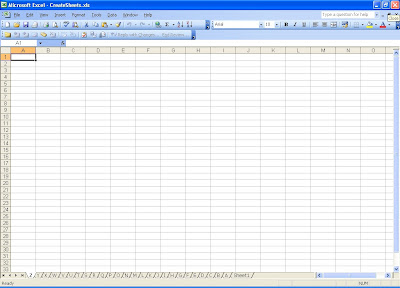
Below is the VBA code [to be put into the macro] which creates sheets with name "A" to "Z" in a excel work book.

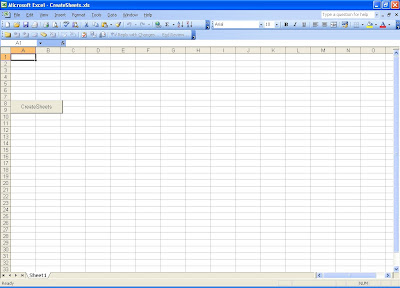
For my ease, I have created a button on the click of which all the sheets will be created.

To create the button, the code is :

Sub AddButton()
Set btn = ActiveSheet.Buttons.Add(0, 90, 100, 25)
btn.OnAction = "CreateNewSheet"
btn.Characters.Text = "CreateSheets"
End Sub


To create sheets:
Sub CreateNewSheet()
For i = 65 To 90
Sheets.Add.Name = Chr(i) ' Ascii representation of A to Z is 65 to 90
Next i
End Sub

Wednesday, June 10, 2009

Import Excel sheet data into outlook using macro


Hi friends,


Here I am going to put the script which is actually run by a macro in Excel sheet which will put the excel sheet data into the Microsoft outlook.


There are two macros required which will put a button into the excel sheet. I have named the sheet as “Data” [Mandetory].


Below is the code to put button into the excel sheet.


Sub AddButton()
Set btn = ActiveSheet.Buttons.Add(0, 90, 100, 25)
'ActiveSheet.Buttons.Add(x,y,length,width)
btn.OnAction = "AddAppointment"
btn.Characters.Text = "Run Outlook"End Sub


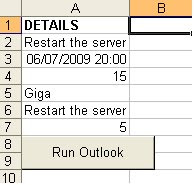
The second macro is the macro which will actually put the following data (in the figure) into the outlook


Private Sub AddAppointment()
Dim objOL 'As Outlook.Application
Dim objAppt 'As Outlook.AppointmentItem
Const olAppointmentItem = 1
Const olMeeting = 1
Const olFree = 0


MySubject = Worksheets("Data").Range("A2").Value
MyStartDatetime = Worksheets("Data").Range("A3").Value
MyDuration = Worksheets("Data").Range("A4").Value
MyLocation = Worksheets("Data").Range("A5").Value
MyBody = Worksheets("Data").Range("A6").Value
MyDelay = Worksheets("Data").Range("A7").Value


Set objOL = CreateObject("Outlook.Application")
Set objAppt = objOL.CreateItem(olAppointmentItem)

objAppt.Subject = MySubject
objAppt.Start = MyStartDatetime
objAppt.Duration = MyDuration
objAppt.Location = MyLocation
objAppt.Body = MyBody
objAppt.ReminderMinutesBeforeStart = MyDelay
objAppt.BusyStatus = olFree
objAppt.Save
Set objAppt = Nothing
Set objOL = Nothing
End Sub

Friday, March 6, 2009

Clipboard Hacking

Friends,

Among bevy of mails I get regularly from different persons, today I find very useful information which I think I should share with you all.

This is about taking information from clipboard (when we copy any text, it goes to clipboard) and putting the text into web page. In out internet life, we sometimes copy the passwords, usernames from the local hard drives and paste those into the webpage we are accessing. Unknowingly, those copied password are stored into the clipboard.

Now the trick is that using java script, the clipboard data can be retrieved and can be shown in the webpage. In another way, it can be retrieved by hackers and he can use it and he can access your account even without letting you know.

The java script used to get the clipboard data is:


var content = clipboardData.getData("Text");
if (content!=null) {
document.write(content);
document.write("");
}


However, there is a way to prevent it. The provision is given in the Internet Options itself. If you want to prevent copying via script then follow the steps:

Go to internet options->security ……………. Press custom level …………In the security settings, select disable under Allow paste operations via script.

So Remember the text you last copied for pasting (copy & paste) can be stolen when you visit web sites using a combination of JavaScript and ASP (or PHP, or CGI) to write your possible sensitive data to a database on another server. Hopefully you haven't copied a credit card number recently before surfing!

Have a safe surfing and have a safe internet life.

Friday, February 20, 2009

Sun Microsystems launches JavaFX mobile platform

Today, Sun launches its java fx platform – a way to enhance the platform used by mobile application. The news unfolds the rest:

Sun Microsystems unveiled its new JavaFX mobile platform in an effort to facilitate enhanced mobile applications. Currently the mobile platform is available on 2.6 mobile phones globally.


JavaFX enables developers to integrate audio and video, graphics, rich text, and Web services into their applications and provides them with the tools to deliver rich Internet applications for desktop, mobile, TV, gaming consoles and other consumer platforms.


The solution was unveiled at the ongoing Sun Microsystems’ annual worldwide developer conference being held at Hyderabad.

Tuesday, October 14, 2008

Java Specification Request

The Java Specification Request (JSR) is the actual description of proposed and final specifications for the Java platform. JSRs are reviewed by the JCP (Java Community Process) and the public before a final release of a specification is made.
At any one time there are numerous JSRs moving through the review and approval process.

The Java Community Process (JCP) an open organization of international Java developers and licensees who develop and revise Java technology specifications, reference implementations, and technology compatibility kits through a formal process.The JCP involves the use of Java Specification Request (JSR), which are formal documents that describe proposed specifications and technologies to be added to the Java platform. Formal public reviews of JSRs are conducted before the JSR becomes final and is voted on by the JCP Executive Committee. A final JSR provides a reference implementation (RI) which is a free implementation of the technology in source code form and a Technology Compatibility Kit (TCK) to verify the API specification.
Below are the lists of JCP Stages while proceeding with JSRs.

JSR Review

The Java Specification Request (JSR) is the first step in developing or revising a Java technology specification. A specification is initiated by community members and approved for development by the Executive Committee. The Java Specification Request (JSR) is the first step in developing or revising a Java technology specification.

New JSRs

New JSRs are those which have been recently submitted to the JCP.

Early Draft Review
Once a JSR is approved, a group of experts is formed to develop a first draft of the specification that anyone with an Internet connection can review.

Public Review
The JSR draft goes out for review by the public where anyone with an Internet connection can read and comment on the draft. The Expert Group uses the public feedback to further revise the document.

Proposed Final Draft
The version of the draft specification that will be used as the basis for the RI and TCK.

Final Release
The leader of the Expert Group then sees that the reference implementation and its associated Technology Compatibility Kit are completed before sending the specification to the Executive Committee for final approval.

Maintenance Review
The completed specification, reference implementation, and Technology Compatibility Kit are updated in response to ongoing requests for clarification, interpretation, enhancements, and revisions.

Withdrawn JSRs
JSRs that are withdrawn from the JCP by their Spec Leads before going to Final Release.

Rejected JSRs
JSRs that are voted down by the Executive Committee during the JSR Review, Draft Approval, or Final Approval Ballots.


Below is sample of how JSR is created for a particular version:


JSR 207: Process Definition for JavaTM
Definition of an annotated Java syntax and APIs for programming business processes in Java.

Section 1. Identification
Submitting Member: BEA Systems
Name of Contact Person:
E-Mail Address:
Telephone Number:
Fax Number:

Specification Lead:
E-Mail Address:
Telephone Number:
Fax Number:

Initial Expert Group Membership:
BEA SystemsSAP AGSun Microsystems
Supporting this JSR:
Cisco SystemsFujitsu LimitedHewlett-PackardIONANokiaSun Microsystems

Section 2: Request

2.1 Please describe the proposed Specification:

The specification will define metadata, interfaces, and a runtime model that enable business processes to be easily and rapidly implemented using the Java language and deployed in J2EETM containers. Process Definition for Java will provide a functional foundation upon which J2EE programmers can implement business processes. This foundation will support tasks commonly encountered when programming business processes, for example parallel execution and asynchronous messaging, while leveraging the programming constructs of Java. As such, the foundation can also be used to build Java implementations of business process initiatives such as BPEL4WS, WSCI, and W3C Choreography.
Process Definition for Java will build on Java Language Metadata technology (JSR-175) to provide an easy to use syntax for describing a business process at the source code level for the J2EE platform. Metadata will bind data and tasks within the process definition to variables, classes, and tasks in the source code. The metadata will be amenable to manipulation by tools.
The specification is intended to provide a set of programming interfaces for advanced business process programming and access to data manipulated directly by the business process.
The specification will be based on the J2EE 1.4 platform in order to avoid reinventing existing XML and web services standards required in business processes.

2.2 What is the target Java platform? (i.e., desktop, server, personal, embedded, card, etc.)

J2EE 1.4


2.3 What need of the Java community will be addressed by the proposed specification?

Although Java developers can author business processes using existing J2EE APIs, the process is slow, tedious and yields code that is hard to revise and maintain over time. A new standard is required to enable Java developers to rapidly and easily build and deploy complex business processes.
Java needs to maintain its lead as the most competitive platform for corporate application development. As business process-style programming becomes more commonplace, it is very important to the Java community that Java applications programmers have a common model for writing and running business processes under J2EE.
The goal of the specification is to provide a mechanism built on top of the existing J2EE APIs, including the core J2EE web services APIs and the Java Language Metadata technology (JSR-175), that supports the requirements of business process programming in an easy to use, simple syntax.
The JSR aims to address the common needs of business process programming: asynchronous and synchronous messaging using XML and web services, message routing with correlation, parallel execution of tasks, exception processing, and compensation.


2.4 Why isn't this need met by existing specifications?

J2EE provides APIs that can be used to develop business processes. But due to lack of specific support for asynchronous conversations, request/response sequences, and message correlation, workflows written using the current J2EE APIs are tedious and time consuming to develop, difficult to modify and maintain, and hard to deploy.


2.5 Please give a short description of the underlying technology or technologies:

Java Language Metadata (JSR 175) provides a standard model for annotating Java code, of which Process Definition for Java will be one application.
Javadoc is a standard syntax for structured comments introduced in the first version of the Java Language Specification.
J2EE provides existing technologies for messaging, state management, and communication; the Process Definition for Java specification will rely on these technologies.


2.6 Is there a proposed package name for the API Specification? (i.e., javapi.something, org.something, etc.)

javax.process.*


2.7 Does the proposed specification have any dependencies on specific operating systems, CPUs, or I/O devices that you know of?

No.


2.8 Are there any security issues that cannot be addressed by the current security model?

No.


2.9 Are there any internationalization or localization issues?

No.


2.10 Are there any existing specifications that might be rendered obsolete, deprecated, or in need of revision as a result of this work?

No.


2.11 Please describe the anticipated schedule for the development of this specification.

March 31, 2003: Expert Group FormedSeptember 30, 2003: Release Community DraftNovember 30, 2003: Release Public Review DraftMarch 31, 2004: Final Release
The schedule above is dependent upon the timely completion of JSR-175.


2.12 Please describe the anticipated working model for the Expert Group working on developing this specification.

Once this JSR is approved, invitations to participate in the Expert Group will be sent to known parties in the business process industry in addition to the standard notification sent to Java Community members. A baseline specification will be created by a process of analyzing and comparing existing proprietary APIs, and this will be developed iteratively by the Expert Group using email and telephone conferencing as the primary mechanisms.
Occasional face-to-face meetings will also be held, roughly quarterly after the initial face-to-face.


2.13 Please describe how the RI and TCK will de delivered, i.e. as part of a profile or platform edition, or stand-alone, or both. Include version information for the profile or platform in your answer.

BEA will deliver a standalone reference implementation (RI) and Technology Compatibility Kit (TCK) for Java Process Definition.


2.14 Please state the rationale if previous versions are available stand-alone and you are now proposing in 2.13 to only deliver RI and TCK as part of a profile or platform edition (See sections 1.1.5 and 1.1.6 of the JCP 2 document).

N/A


2.15 Please provide a description of the business terms for the Specification, RI and TCK that will apply when this JSR is final.

BEA will license the specification, RI and TCK to all interested parties on a royalty free basis.

Section 3: Contributions
3.1 Please list any existing documents, specifications, or implementations that describe the technology. Please include links to the documents if they are publicly available.

Existing J2EE specifications, e.g. JAX J2EE 1.4 http://jcp.org/en/jsr/detail?id=151

BEA WebLogic Integration(reference material will be provided to Expert Group, once it is formed) BPEL4WS http://dev2dev.bea.com/techtrack/BPEL4WS.jsp

Sun's Java Business Integration JSR http://jcp.org/en/jsr/detail?id=208


3.2 Explanation of how these items might be used as a starting point for the work.

The purpose of this specification is to leverage the first standard above, Java Language Metadata (JSR 175), to provide a standard that simplifies development of the commonly required functionality for implementing business processes. Process Definition for Java will utilize the metadata syntax of JSR 175. Since JSR 175 is scheduled for completion with J2SE 1.5, Process Definition for Java may use a pre-processor on the JSR-175 syntax for J2EE 1.4 implementations.


In investigating deployment models for Process Definition for Java, the expert group will determine the extent to which this specification should refer and relate to JSR-088.
The existing XML Schema standard is referenced because it will describe the structure of messages passed between participants in a business process.
Existing implementations such as item 5 above achieve several goals of this JSR and will provide a starting point for the specification.


Items 6-10 above reference cross-platform business process initiatives. This specification anticipates that these initiatives would be implemented on the Java platform using Process Definition for Java. Sun's Java Business Integration JSR will define SPIs that provide a business integration environment. An implementation of Process Definition for Java could use the JBI SPIs.


http://jcp.org/en/jsr/all -- This is the link where you can find all the JSRs.


Tuesday, September 23, 2008

Third Option

Every day, thousands of companies generate digital landfills of data as they cater to new customers and generate sales through the internet. All this requires vast data centres to adroitly — and safely — manage and store digital information. India, an IT hotspot, is destined to bite off a large chunk of this rapidly growing business. The business world says it all: ---------


The data centre market in India is about $120 million — a meagre 1 per cent of the global market. However, India is “the fastest growing market in the APAC region, with growth rates in the next five years expected to be 22.30 per cent”, says Naresh Singh, principal analyst for enterprise network infrastructure & services at Gartner. According to Anu David, senior research analyst for the ICT practice of Frost & Sullivan, South Asia & Middle East, Indian data centres will soon become globally competitive.


Notably, companies are rapidly moving from managing their content through in-house or ‘captive’ data centres, to ‘third party’ ones run by Indian companies. Today, India has twice as many captive data centres as it does third-party ones. Estimates by Datamonitor, a London-based market research company, suggest that of the 7 million sq. ft of data centre space to be added in the next four years, more than 90 per cent will be for third-party data centres.


In the past, companies were concerned about outsourcing their data handling to others because of security, accountability and intellectual property rights issues. For instance, firms such as ICICI Bank and Indian Oil Corporation (IOCL) have traditionally banked on in-house data centres. ICICI Bank has its main data centre in Mumbai and a disaster recovery site in Hyderabad, while IOCL has data centres in Jaipur and Gurgaon. “The biggest advantage is that we are not dependent on uncertainties faced by a vendor,” says S.S. Soni, executive director for information systems at IOCL. “We are also able to maintain secrecy of information.”


Today, Indian companies who had been using data centres located in the US are shifting their data to local, Indian ones who offer them six times the access speed. For instance, clients of Tata Communications have expressed an intention to move their data centres from the US and EMEA region (Europe, Middle East and Africa) to India. Moreover, Indian businesses are also adopting data centres to host their mission-critical applications such as enterprise resource planning and customer relationship management software. Indian data centre companies have also begun to rapidly embrace data centres as places where long-term, sustainable business solutions are offered for data storage and management. Companies in banking, financial services and insurance, telecom and manufacturing are also investing in data centres.


“A few years ago, if you had to set up a data centre, it had to be in Manhattan or California,” says K.P. Unnikrishnan, director of marketing (alliances and teleweb sales) of Sun Microsystems India. “But in the coming years, most data centres will be in the Asia-Pacific region with preference for India.” Says Sunil Gupta, head of business operations of data centre services at Reliance Infocomm, “The past three years have seen an explosive growth in the data centre business.” His outfit plans to pump in between Rs 1,000 crore and Rs 1,500 crore for seven more data centres in addition to the six the company has in Bangalore and Mumbai. Tata Communications has 34 data centres across three continents and plans to expand to 500,000 sq. ft across 20 new centres in India, UK, US and Singapore. “Close to 400,000 sq. ft is going to be in India,” says Vinay Nagpal, group manager for hosting and data centre services of global managed services at Tata Communications. “Given that demand is way above supply, most of the facilities we are building are already sold out. In fact, we are not able to build up fast enough.”


Ctrl S Data in Hyderabad is also expanding at a rapid clip. Having already set up the country’s first tier-IV data centre in Hyderabad, it intends to spend Rs 750 crore on data centres in six cities across the country. Says P. Sridhar Reddy, chairman and managing director of the company, “The Indian data centre market grew very slowly till 2004 due to the high cost of hosting, which can be attributed to the expensive bandwidth. But with the bandwidth costs going down drastically, data centres in India are set for a giant leap.”


The shift from captive to third party is making increasingly more sense to companies who are interested in focusing on their core competencies. Companies require huge investments in order to maintain support infrastructure, whereas third-party outsourcing assumes the burden for doing so. Nagging daily concerns over power supply, reliability, sufficient bandwidth and ample disk space are now somebody else’s problems, while stringent service level agreements will ensure that a high quality of service offered by outside-companies is a contractual obligation.
“We invested in data centres back in 1999 when we didn’t have any other option,” says Pravir Vohra, chief technology officer of the ICICI Group. “But in principle, we are not against outsourcing applications to third party vendors, especially those that are not mission-critical.” The physical structure and equipment within the data centres belongs to the ICICI group, but it has outsourced certain applications and management to third-party providers such as HP, Sun Microsystems and IBM.


So, what could trip up growth of data centres in India? Power is the biggest concern, considering the shoddy state of the power sector in India. Gartner estimates that power will become a critical decision factor for India in about two years. Considering traditional data centres typically waste more than 60 per cent of the energy that they use to cool equipment, this is bad news for Indian companies. This means that backup generators or indigenous ‘clean’ technologies will become a necessity. Says Unnikrishnan, “New greening technologies can lead to dramatic improvements in energy efficiency and cost as the data centre is fast becoming critical for today’s business.”


David says that India will “become a major player in terms of both revenue and capacity, second only to Japan”, despite the many sizeable potholes facing the data centre industry. For this to come true, however, the government needs to fix the basic infrastructure so that companies are not hindered in their goals of becoming global leaders.


Hope you all will find it useful.

Total Pageviews